Shin Splints – Pain Along the Shin: Causes, Symptoms, Treatment, and Prevention
Shin Splints (Medical term: Medial Tibial Stress Syndrome – MTSS) is one of the most common injuries among runners, dancers, and triathletes. It is not just a minor, “nagging” pain that can be ignored. In reality, the tingling or dull ache along the shin bone may be your body’s warning sign that you are training incorrectly, overloading tissues, and approaching a more serious injury — potentially even a stress fracture.
1. What Are Shin Splints?
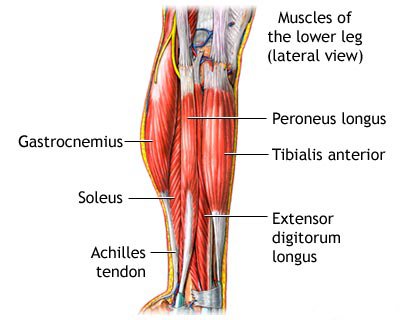
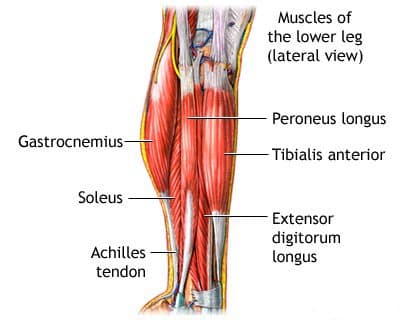
Muscle anatomy of the lower leg: gastrocnemius, soleus, peroneus longus, tibialis anterior, extensor digitorum longus, Achilles tendon. Source: sportandspinalphysio.com.au
Shin splints refer to inflammation of the soft tissues attached to the medial (inner) surface of the tibia, commonly involving:
Posterior tibialis muscle
Flexor digitorum longus
Periosteum (the membrane covering the bone)
Illustration of the tibialis anterior muscle and common pain location in shin splints. Source: Wiltshireosteopathy.co.uk
Location of the tibialis anterior muscle and the typical pain area associated with shin splints.
Pain usually appears along the lower inner shin and is especially noticeable during:
Running
Jumping
Excessive foot tension or overuse
At first, the pain occurs only during activity. If left unaddressed, it may progress and persist even at rest.
2. Signs and Symptoms of Shin Splints
You may suspect shin splints if you experience:
A dull ache along the tibia, initially during exercise, later lingering even at rest
Tenderness when pressing on the lower third of the shin bone
Increased pain during dorsiflexion (pulling the foot upward) or while running
Morning stiffness, especially with the first few steps feeling heavy and sluggish
If not treated promptly, shin splints can progress into stress fractures, a much more serious injury requiring extended recovery time.
3. Common Causes of Shin Splints
Several factors can contribute to shin splints, with the most common including:
3.1. Rapid Increase in Training Volume or Intensity
For example, if you are accustomed to running 5 km but suddenly increase to 10 km within a week, your muscles, tendons, and bones may not have enough time to adapt — leading to inflammation and pain.
3.2. Unsuitable Training Surfaces
Running on hard concrete, slanted roads, or uneven gravel increases ground impact forces on the tibia, making soft tissues more susceptible to overload.
3.3. Poor or Worn-Out Running Shoes
Shoes that are too old, lack cushioning, or do not suit your foot structure reduce shock absorption and increase stress on the shins.
3.4. Weak or Inefficient Supporting Muscles
Key muscles such as the glutes and foot stabilizers play a major role in force distribution. When these muscles are weak, excessive load is transferred directly to the tibia.
4. Biomechanical Mechanism Behind Shin Splints
With every running or jumping step, your body absorbs a ground reaction force (GRF) that can reach 2–3 times your body weight.
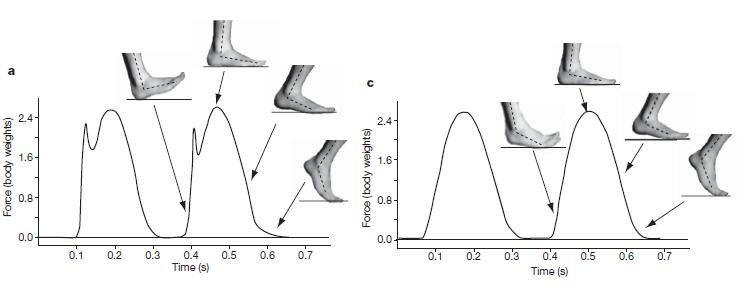
Comparison of impact forces between rearfoot strike (RFS) and forefoot strike (FFS) in barefoot conditions. RFS shows a significantly higher initial impact peak. Source: researchgate.net
If the muscle–tendon–joint system does not absorb force effectively, that force is transmitted directly to the tibia. In this case:
Weak muscles → poor force distribution
Faulty landing mechanics → higher-than-normal shock forces
Inadequate footwear → reduced shock absorption
The result is inflammation of tendons and periosteum. Over time, this inflammation causes micro-damage within the bone structure and may progress into a stress fracture.
5. Treatment and Recovery for Shin Splints
5.1. Immediate Load Reduction
Stop running for 5–10 days to reduce stress on the tibia
Switch to low-impact activities such as swimming, light cycling, or core training
5.2. Ice Therapy
Apply ice to the painful area for 10–15 minutes after training to reduce inflammation and pain
5.3. Stretching and Massage
Stretch the posterior tibialis
Massage the flexor digitorum muscles
Use a massage ball to roll along the inner shin
5.4. Suggested Rehabilitation Exercises
Towel scrunches (using toes) – 2 minutes
Toe lifts – 15 reps × 2 sets
Front foot elevated split squats – 15 reps × 2 sets
Eccentric calf raises – 10 reps × 2 sets
Posterior tibialis stretch – 1 minute per side
5.5. Shoe Assessment
Replace shoes if they are worn out or have lost cushioning
Choose footwear that provides proper arch support
6. How to Prevent Shin Splints
Prevention is better than cure — and this is especially true for shin splints. Effective prevention strategies include:
Gradually increasing training load: no more than 10% increase in distance or intensity per week
Running on more forgiving surfaces such as asphalt, tracks, or grass
Regularly strengthening the glutes, core, and foot muscles to improve shock absorption
Maintaining proper running form and avoiding overstriding
Monitoring pain signals and addressing symptoms early
Conclusion
Shin splints are common but highly preventable and treatable when detected early and managed correctly. Understanding the causes, biomechanics, and treatment strategies will help you return to training sooner and reduce the risk of recurrence.
If you run frequently or participate in high-intensity sports, pay close attention to even the smallest signals from your body. A little caution today can save you from months of unwanted downtime.